Commercial Vehicle VIN Red Flags That Signal Compliance or Cost Issues
Commercial Vehicle VIN Red Flags That Signal Compliance or Cost Issues
Buying a used commercial vehicle can expose businesses to risks far beyond cosmetic wear. Some of the most expensive problems are tied to VIN-related red flags that signal compliance issues, misclassification, or hidden costs.
This guide explains commercial vehicle VIN red flags that signal compliance or cost issues, how to identify them early, and what steps buyers in Canada should take before committing to a purchase.
Why VIN Red Flags Matter for Commercial Buyers
Commercial vehicles operate under stricter rules than private vehicles. When VIN-related problems appear, they often point to deeper issues such as regulatory non-compliance, misrepresented specifications, or legal exposure.
Ignoring these warning signs may result in:
- Insurance denial or higher premiums
- Registration or licensing delays
- Unexpected compliance upgrades
- Costly repairs or forced downtime
Red Flag 1: VIN Classification Does Not Match Advertised Use
One of the most common issues is a mismatch between how a vehicle is advertised and how it was manufactured.
Examples include:
- Light-duty vehicles marketed as heavy-duty work trucks
- Passenger platforms sold as commercial-grade vehicles
VIN decoding helps confirm the vehicle’s original class, which determines legal and operational limits.
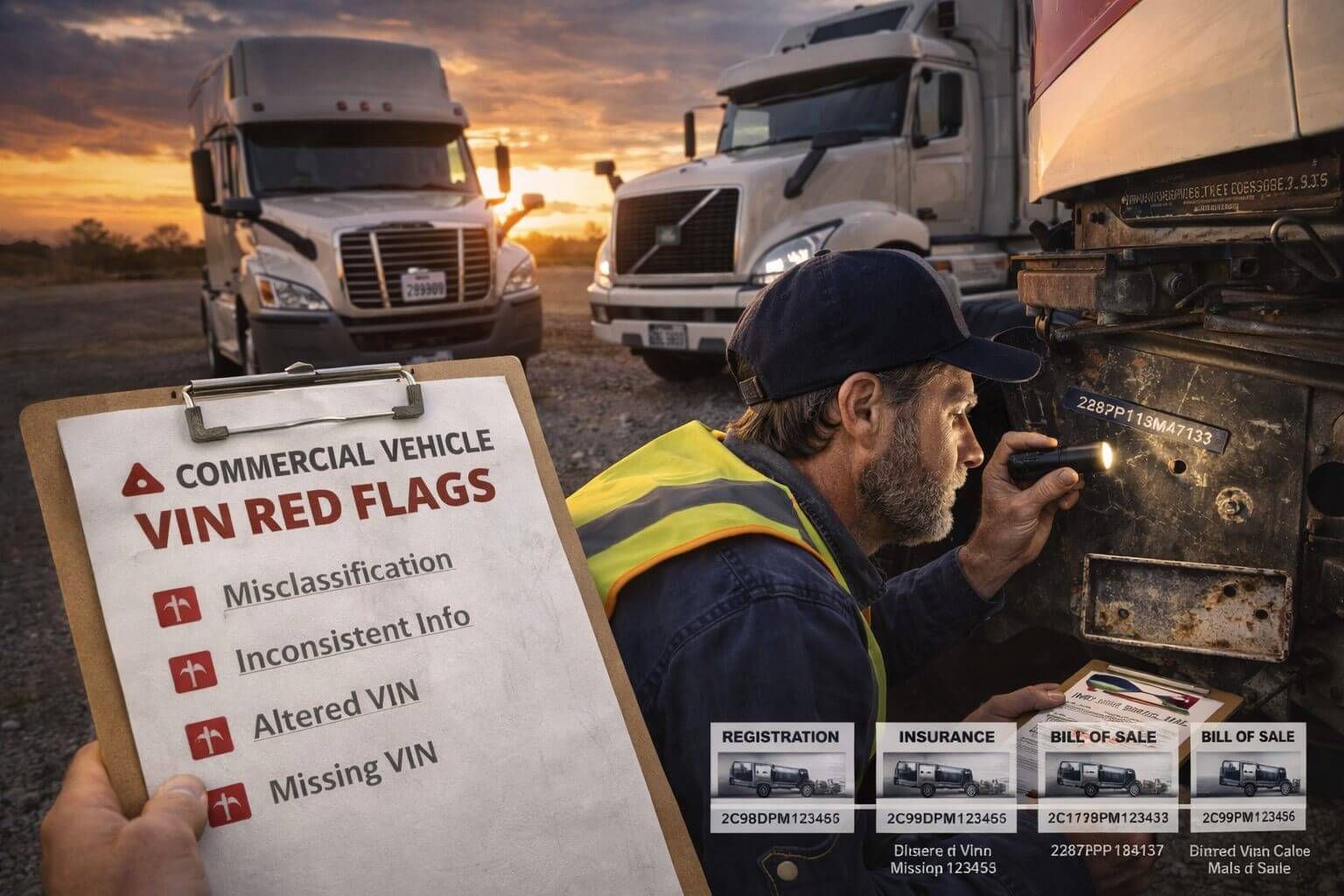
Red Flag 2: Inconsistent VIN Information Across Documents
A commercial vehicle’s VIN should match exactly across:
- Registration documents
- Insurance records
- Bills of sale
Any discrepancy—even a single character—can cause compliance and ownership problems.
Red Flag 3: Altered or Tampered VIN Plates
VIN tampering is rare but extremely serious. Be cautious if you see:
- Grinding or sanding marks around the VIN area
- Uneven or misaligned characters
- Fresh paint or welds near the VIN plate
Altered VINs may indicate theft or attempts to disguise vehicle identity.
Red Flag 4: VIN Reveals Different Engine or Drivetrain
VIN decoding may show that the vehicle is equipped differently than claimed.
| Seller Claim | VIN-Based Finding |
|---|---|
| Diesel powertrain | Gasoline engine |
| Heavy-duty drivetrain | Light-duty configuration |
| High towing capacity | Lower-rated platform |
Such mismatches can significantly affect operating costs and compliance.
Red Flag 5: Missing or Unreadable VIN
Commercial vehicles with missing or unreadable VINs present serious risk.
Common causes include:
- Frame repairs or modifications
- Corrosion or damage to VIN plates
- Intentional VIN removal
Without a valid VIN, registration and insurance may be impossible.
How to Verify a Commercial Vehicle VIN
Before finalizing a purchase:
- Locate and visually inspect the VIN
- Compare it against all documents
- Run a commercial vehicle VIN check to confirm validity and alignment with seller claims
VIN verification should be completed before payment or ownership transfer.
VIN Red Flags vs Acceptable Wear
| VIN Issue | Risk Level |
|---|---|
| Minor wear, readable VIN | Low with verification |
| VIN mismatch | Very high |
| Altered VIN | Extremely high |
| Missing VIN | Extremely high |
Understanding these differences helps buyers avoid unnecessary exposure.
Final Thoughts
Understanding commercial vehicle VIN red flags that signal compliance or cost issues helps businesses avoid legal exposure and unexpected expenses. VIN-related problems are rarely minor and often indicate deeper operational risks.
Before purchasing a used commercial vehicle, inspect the VIN carefully and verify it using a commercial vehicle VIN check. Identifying red flags early protects both compliance and long-term profitability.