What an RV VIN Reveals About Chassis, Engine, and Model Year
What an RV VIN Reveals About Chassis, Engine, and Model Year
When evaluating a used RV or motorhome, buyers often focus on interior layout, appliances, and cosmetic condition. However, many of the most important factors—safety systems, drivetrain, recalls, and serviceability—are tied to the RV’s Vehicle Identification Number (VIN).
This guide explains what an RV VIN reveals about the chassis, engine, and model year, and why decoding the VIN is a critical step before buying an RV or camper in Canada.
Why the RV VIN Matters More Than You Think
RVs are built on commercial vehicle chassis supplied by manufacturers such as Ford, Chevrolet, Mercedes-Benz, or Ram. The VIN identifies this chassis and determines:
- Engine and transmission specifications
- Safety systems and recall eligibility
- Parts compatibility and service requirements
Without VIN verification, buyers may misunderstand what they are actually purchasing.
Chassis Manufacturer and Platform
An RV VIN reveals the chassis manufacturer, which is separate from the coach brand.
For example, different RVs may share the same coach manufacturer but be built on different chassis platforms. VIN decoding helps confirm:
- Chassis make and platform
- Commercial vs light-duty configuration
This information affects maintenance costs, drivability, and long-term reliability.
Engine Type and Drivetrain Information
Depending on the chassis, the VIN may indicate:
- Engine displacement and fuel type
- Gasoline vs diesel configuration
- Drivetrain layout
Engine verification is especially important when sellers advertise performance or towing capabilities.
Model Year vs Coach Year
One of the most common RV misunderstandings involves model year differences.
The VIN confirms the chassis model year, which may differ from:
- The coach build year
- The year shown in listings or advertisements
Because recalls, emissions rules, and parts compatibility depend on the chassis year, VIN-based verification is essential.
Using VIN Data to Spot Listing Discrepancies
VIN decoding helps identify mismatches between seller claims and factory data.
| Seller Claim | VIN-Based Insight |
|---|---|
| Newer model year | Older chassis year |
| High-output engine | Standard engine |
| Heavy-duty chassis | Light-duty platform |
When discrepancies appear, buyers should pause and request clarification.
VIN Checks and Safety Recalls
Safety recalls are issued based on chassis VINs—not coach brands. Checking the VIN helps buyers identify:
- Open safety recalls
- Recall eligibility based on engine or chassis
Running an RV VIN check helps confirm whether the VIN is valid and whether recall-related information may apply.
What the RV VIN Does Not Show
While VIN data is powerful, it does not replace:
- Inspection for water intrusion or mold
- Evaluation of appliances and electrical systems
- Roof, seal, and slide-out inspection
VIN verification should be combined with professional RV inspections.
How VIN Information Fits Into RV Buying Decisions
VIN decoding is most effective when combined with:
- VIN location verification
- Ownership and registration review
- Mechanical and structural inspections
Together, these steps reduce the risk of buying an RV with hidden issues.
Final Thoughts
Understanding what an RV VIN reveals about the chassis, engine, and model year gives buyers a clearer picture of what they are actually purchasing. VIN decoding helps verify drivetrain details, confirm the true model year, and identify safety considerations tied to the chassis.
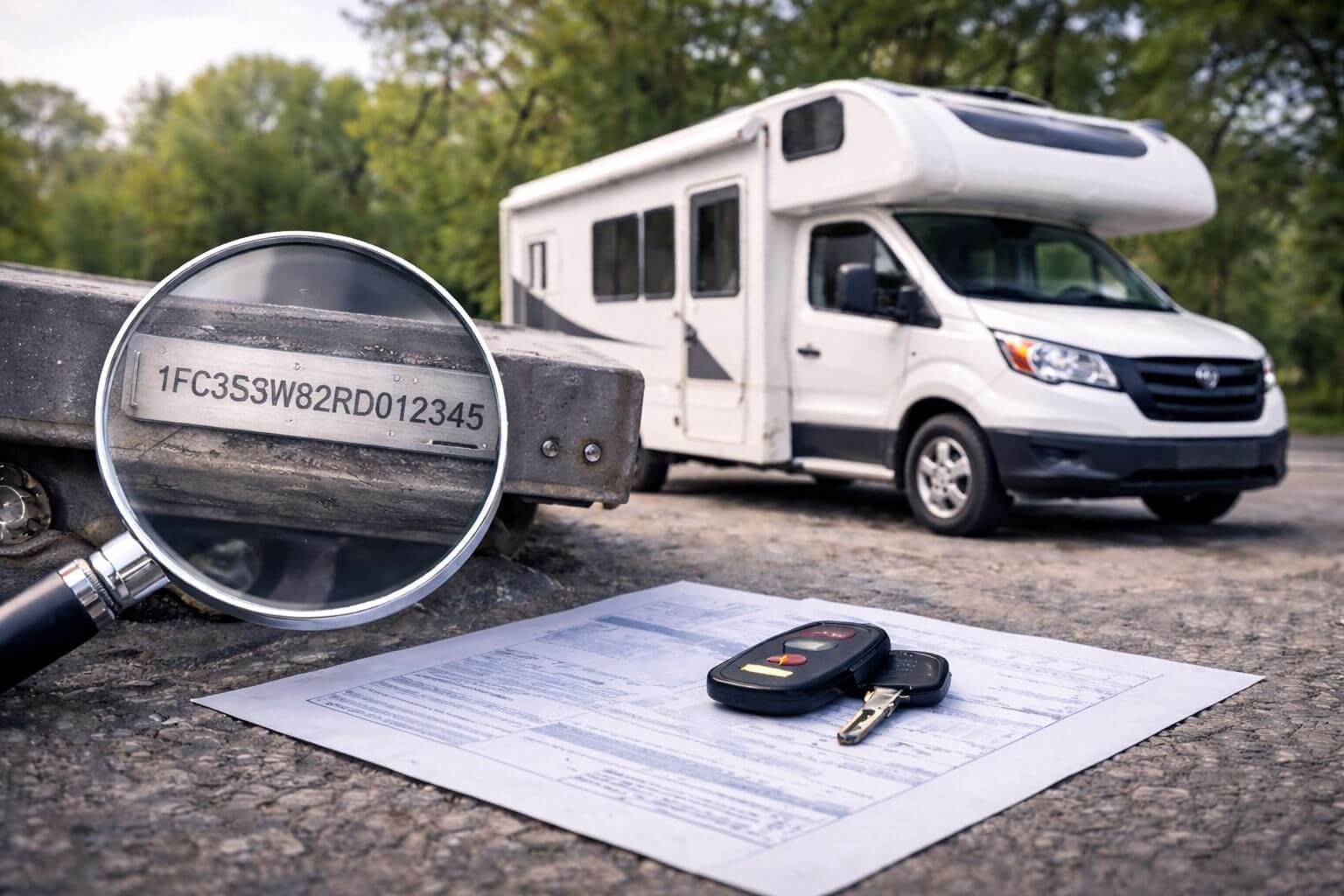
Before buying a used RV or camper, locate the correct chassis VIN and verify it using an RV-specific VIN check. Accurate VIN information upfront helps prevent costly surprises later.