What a Commercial Vehicle VIN Reveals About Usage, Specs, and Class
What a Commercial Vehicle VIN Reveals About Usage, Specs, and Class
When buying a used commercial vehicle, listings often emphasize mileage and condition. However, many of the most important details—vehicle class, drivetrain capability, and intended use—are encoded in the Vehicle Identification Number (VIN).
This guide explains what a commercial vehicle VIN reveals about usage, specs, and class, and why VIN decoding is essential before purchasing work trucks, vans, or fleet vehicles in Canada.
Why the VIN Is Critical for Commercial Vehicles
Commercial vehicles are designed for specific workloads. A VIN helps buyers understand whether a vehicle was built for:
- Light delivery or service use
- Heavy-duty hauling or towing
- Urban fleet operation
Misunderstanding a vehicle’s original class or specifications can lead to compliance issues, premature wear, and unexpected costs.
Vehicle Class and Intended Use
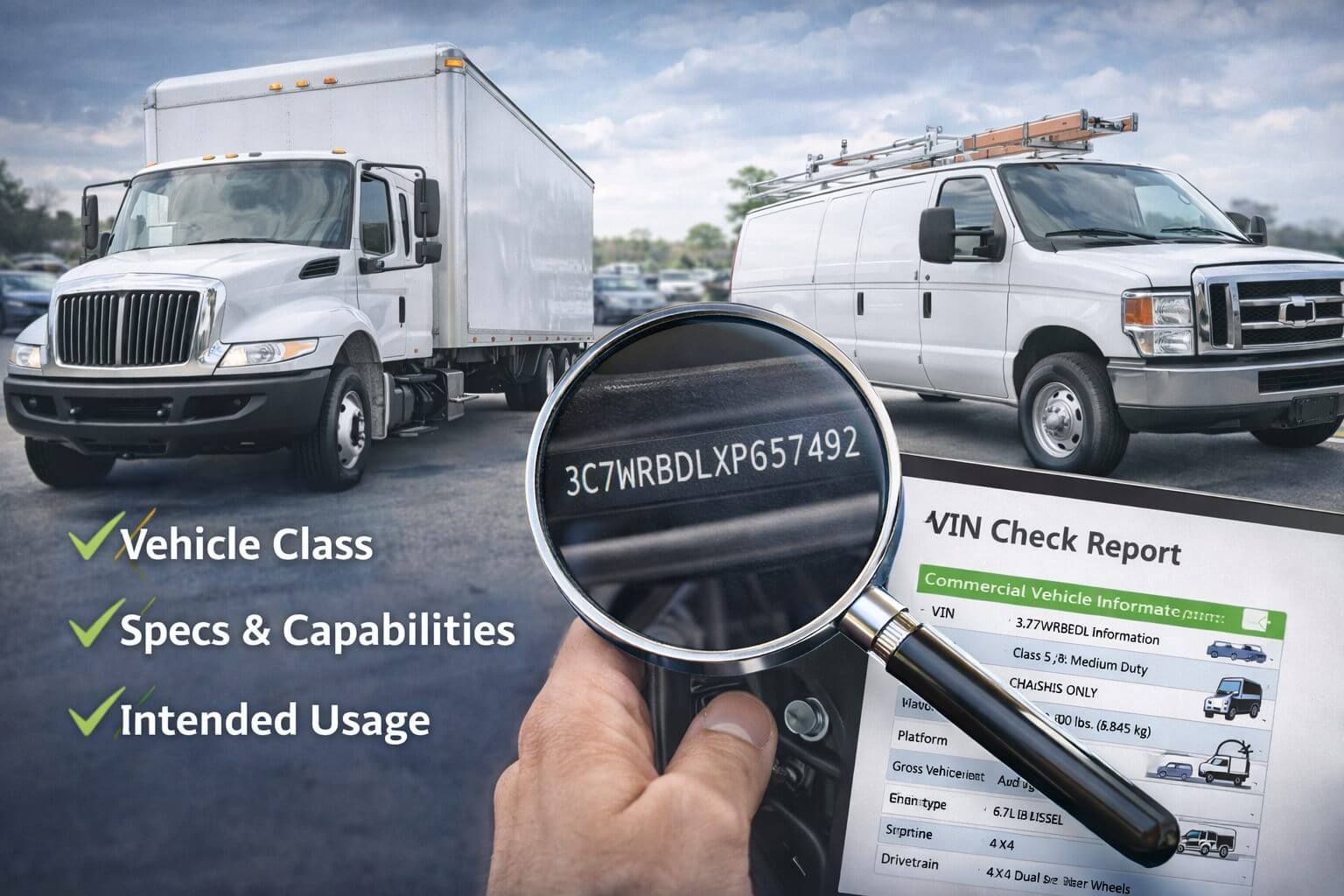
VIN decoding helps identify the vehicle class, which determines:
- Payload and towing limits
- Licensing and insurance requirements
- Suitability for business use
A vehicle marketed as a “work truck” may actually be a lighter-duty configuration than required.
Engine, Drivetrain, and Platform Details
A commercial vehicle VIN may reveal:
- Engine type and displacement
- Gasoline vs diesel configuration
- Drivetrain layout and axle configuration
These details affect fuel costs, maintenance schedules, and long-term reliability.
Manufacturing Year and Build Configuration
The VIN confirms the model year, which is important for:
- Emissions standards
- Parts compatibility
- Safety recall eligibility
VIN-based year verification helps prevent buyers from paying for newer models than they are actually getting.
Using VIN Data to Identify Listing Mismatches
VIN decoding can reveal discrepancies between seller claims and factory data.
| Seller Claim | VIN-Based Insight |
|---|---|
| Heavy-duty truck | Light-duty classification |
| Diesel engine | Gasoline configuration |
| High towing capacity | Lower-rated platform |
When mismatches appear, buyers should reassess the purchase.
VIN Checks and Fleet Usage Context
Many commercial vehicles originate from fleets. VIN verification helps buyers understand whether a vehicle was likely:
- Part of a delivery fleet
- Used for service or utility work
- Built for sustained commercial operation
Running a commercial vehicle VIN check helps confirm whether the VIN is valid and aligns with the vehicle’s advertised role.
What the VIN Cannot Tell You
While VIN data provides essential insight, it does not replace:
- Physical inspection for wear and damage
- Evaluation of suspension, brakes, and frame
- Review of maintenance practices
VIN verification should be combined with hands-on inspection.
How VIN Information Fits Into Buying Decisions
Commercial vehicle buyers should use VIN data alongside:
- VIN location verification
- Ownership and registration review
- Mechanical inspection and test driving
Together, these steps reduce the risk of buying vehicles unsuited to business needs.
Final Thoughts
Understanding what a commercial vehicle VIN reveals about usage, specs, and class gives buyers factual insight beyond listings and verbal claims. VIN decoding helps confirm whether a vehicle is built for its intended workload.
Before buying a used commercial vehicle, locate the VIN, decode it carefully, and verify it using a commercial vehicle VIN check. Accurate VIN information upfront helps businesses make safer purchasing decisions.