
Where to Find the VIN on an ATV (All Major Brands)
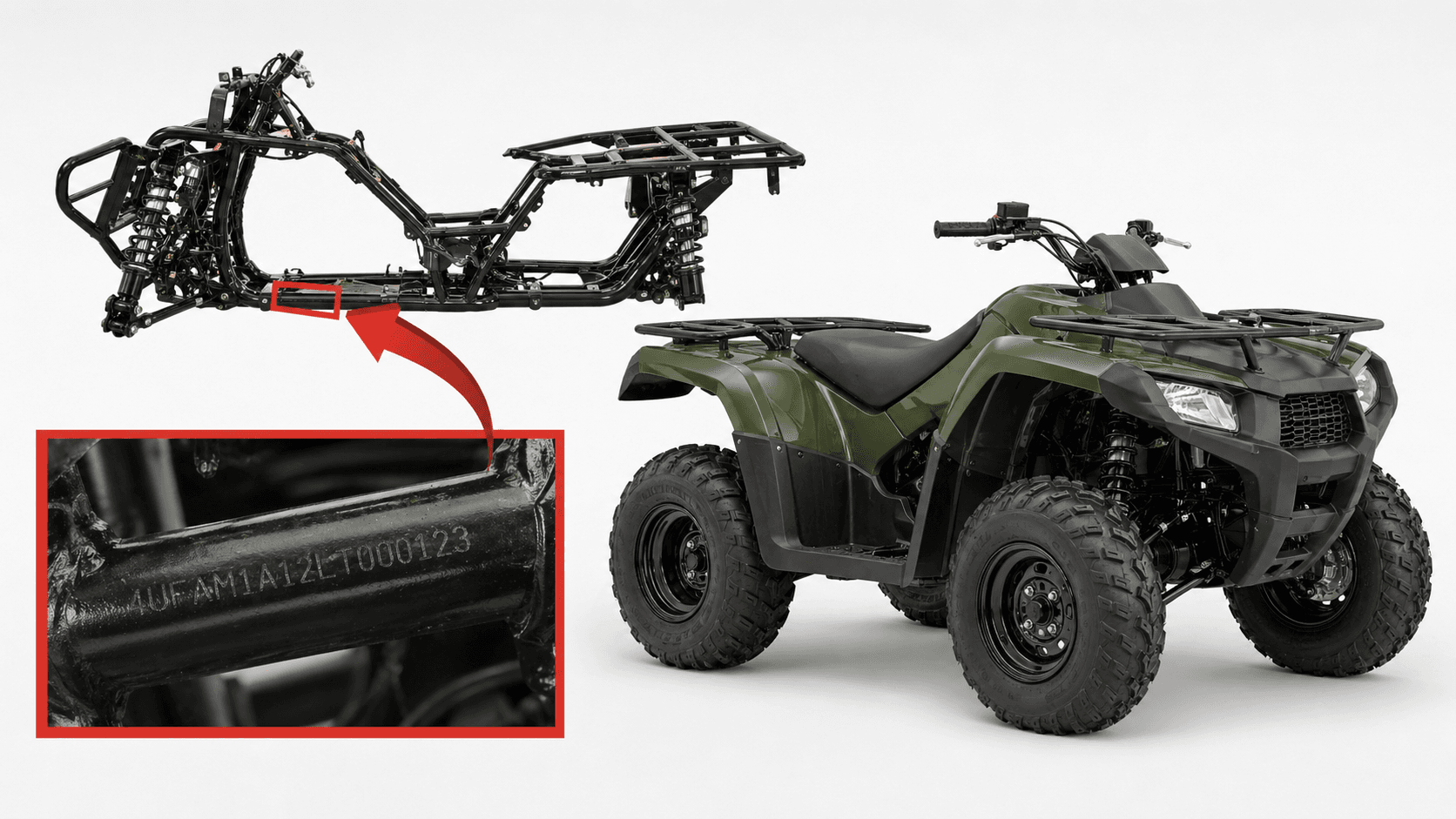
Where to Find the VIN on an ATV (All Major Brands)
Before you can verify an ATV’s details, ownership status, or theft risk, you need the correct Vehicle Identification Number (VIN). Unlike cars, ATVs don’t have a single standardized VIN location, and sellers don’t always know where to look.
This guide explains where to find the VIN on an ATV, including common locations across major brands, what a legitimate VIN should look like, and what to do if the VIN is missing or damaged.
Why VIN Location Matters for ATVs
ATVs are frequently sold through private listings and used off-road, where plates and registration documents may be limited or unavailable. The VIN is often the only reliable identifier that links the ATV to manufacturer records and verification tools.
Finding and confirming the VIN allows you to:
- Verify the model year and manufacturer
- Confirm the ATV matches the seller’s description
- Screen for theft or misrepresentation
- Proceed with an ATV-specific VIN check
Common Places to Find the VIN on an ATV
While VIN placement varies, most ATVs follow similar patterns. Start by inspecting these areas carefully.
1. Frame Near the Front Suspension or Steering Stem
The most common VIN location is stamped directly into the frame:
- Near the front left or right suspension arm
- Along the steering stem or head tube
- On the main frame rail behind the front wheels
The VIN may be stamped into bare metal or displayed on a small metal plate.
2. Under the Seat or Near the Engine Bay
Some manufacturers place the VIN:
- Under the seat on the frame rail
- Near the engine mount or crankcase area
This location may require removing the seat or side panel for visibility.
3. Manufacturer VIN Plate or Label
Depending on model year, the VIN may appear on:
- A riveted metal VIN plate
- A factory label attached to the frame
VIN plates should look professionally installed. Loose, mismatched, or damaged plates are a warning sign.
VIN Locations by Major ATV Brands
While exact placement varies by model and year, the following patterns are common:
| Brand | Typical VIN Location |
|---|---|
| Honda | Frame near front suspension or steering stem |
| Yamaha | Frame rail behind front wheel or under seat |
| Polaris | Frame near engine or front suspension |
| Can-Am | Frame rail or under seat area |
| Suzuki | Front frame rail or steering head |
| Kawasaki | Frame near front suspension |
If you’re unsure, inspecting the front frame area first usually yields results.
What a Legitimate ATV VIN Should Look Like
A valid ATV VIN typically:
- Contains 17 characters (letters and numbers)
- Is clearly stamped or professionally affixed
- Matches any paperwork provided by the seller
Be cautious if the VIN:
- Appears ground down, altered, or re-stamped
- Is partially missing or unreadable
- Does not follow standard VIN formatting
If anything looks suspicious, pause the transaction.
What to Do After You Find the VIN
Once located, use the VIN to verify the ATV’s details. Running an ATV VIN check helps confirm whether the VIN is valid and whether the ATV aligns with the seller’s claims.
VIN verification is especially important before making a payment or signing a bill of sale.
When an ATV Has No VIN or an Unreadable VIN
Situations where the VIN is missing or damaged should be treated carefully. This can occur due to:
- Frame replacement or severe damage
- Theft or attempted VIN removal
- Improper modifications
ATVs without a readable VIN are difficult to verify, register, or resell. In most cases, it’s safest to walk away.
Final Thoughts
Knowing where to find the VIN on an ATV is a critical first step before any verification or purchase decision. Because VIN placement varies, taking the time to inspect the frame carefully helps prevent costly mistakes.
Once you’ve located the VIN, verify it using an ATV-specific VIN check and compare the results with the seller’s description. A few minutes of inspection can save you from long-term issues.