
How to Check a Motorcycle VIN Before Buying
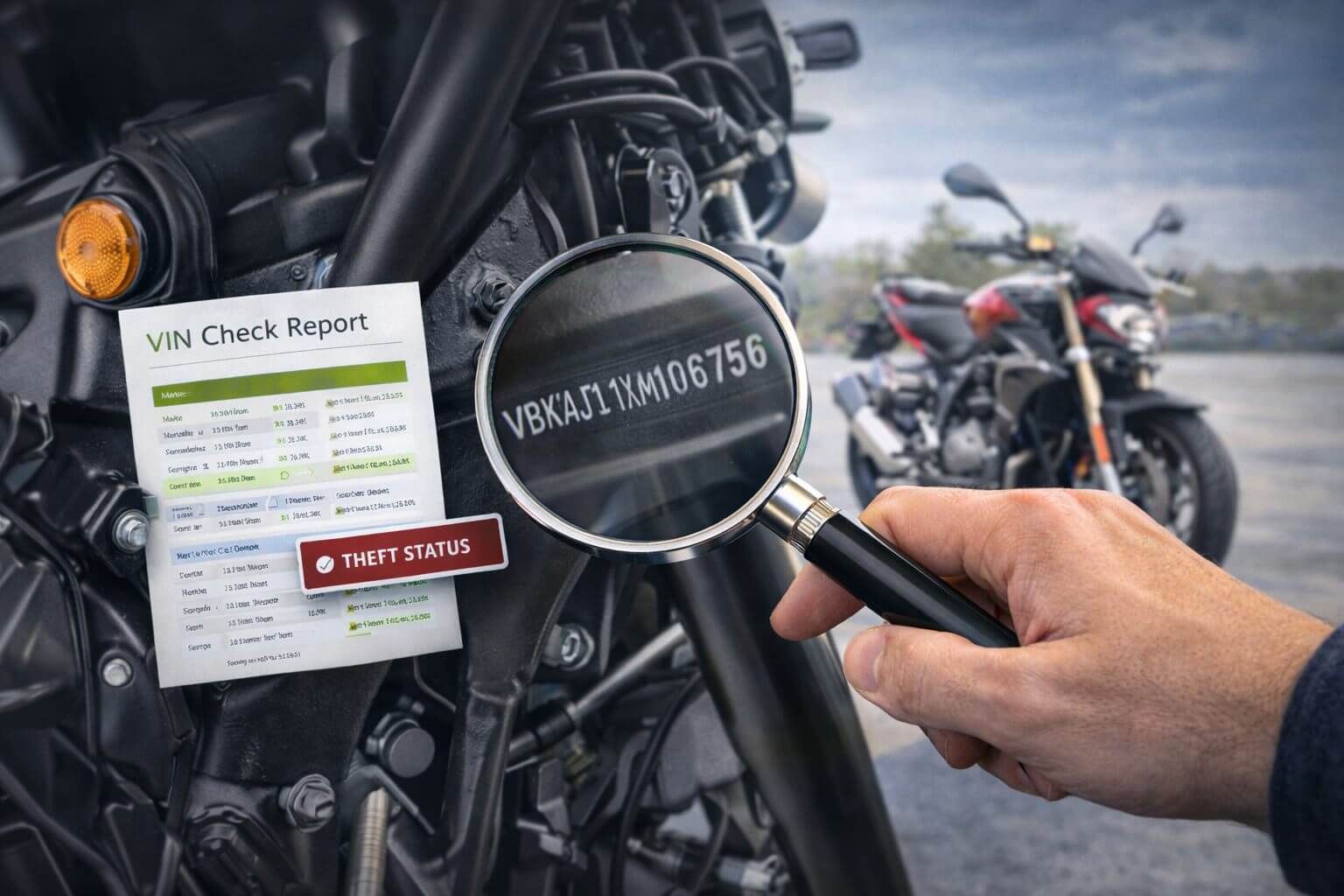
How to Check a Motorcycle VIN Before Buying
Buying a used motorcycle can be exciting—but it also comes with risks that aren’t always visible during a short inspection or test ride. Issues related to theft, misrepresented model years, accident history, or improper ownership often surface only after the purchase.
This guide explains how to check a motorcycle VIN before buying, what the VIN can reveal, and how VIN verification helps reduce buyer risk in Canada.
Why VIN Checks Matter for Motorcycles
Motorcycles are frequently sold through private listings and may change hands without the same level of documentation as cars. Because of this, the Vehicle Identification Number (VIN) becomes the most reliable way to verify what the motorcycle actually is.
A VIN check helps buyers:
- Confirm the motorcycle’s model year and manufacturer
- Verify that the bike matches the seller’s description
- Screen for theft or suspicious records
- Identify potential red flags before purchase
Step 1: Locate the VIN on the Motorcycle
Before running any checks, locate the VIN on the motorcycle. Common locations include:
- The steering head or headstock (near the handlebars)
- The frame near the front fork
- On a manufacturer VIN plate attached to the frame
The VIN should be clearly visible and appear professionally stamped or affixed.
Step 2: Make Sure the VIN Looks Legitimate
Inspect the VIN closely before proceeding. A legitimate motorcycle VIN:
- Contains 17 characters
- Matches any registration or insurance documents
- Shows no signs of grinding, re-stamping, or alteration
If the VIN appears damaged or inconsistent, this is a major warning sign.
Step 3: Run a Motorcycle-Specific VIN Check
Once you have the VIN, use it to verify the motorcycle’s details. Running a motorcycle VIN check helps confirm whether the VIN is valid and whether the bike aligns with the seller’s claims.
VIN verification is especially important when sellers advertise:
- Rare or limited-edition models
- Low-mileage motorcycles
- Recent model years at discounted prices
Step 4: Screen for Theft and Ownership Issues
Motorcycles are common theft targets due to their size and resale demand. A VIN-based screening helps reduce the risk of purchasing a stolen motorcycle.
Be cautious if:
- The seller avoids providing the VIN upfront
- Ownership documents are missing or unclear
- The price is significantly below market value
Step 5: Compare VIN Details With the Listing
After decoding the VIN, compare the results with the listing description.
| Listing Claim | VIN-Based Check |
|---|---|
| Newer model year | Actual production year |
| Higher trim or edition | Factory configuration |
| Original components | VIN-confirmed specs |
Any mismatch should prompt further questions.
What a Motorcycle VIN Check Cannot Replace
While VIN checks are powerful, they do not replace:
- Mechanical inspections
- Test rides
- Maintenance record review
VIN verification should be used alongside physical evaluation and professional inspection.
Final Thoughts
Knowing how to check a motorcycle VIN before buying helps protect you from theft, misrepresentation, and costly surprises. VIN verification provides factual confirmation that listings and verbal claims cannot guarantee.
Before purchasing a used motorcycle, locate the VIN, inspect it carefully, and use a motorcycle-specific VIN check to confirm the bike’s identity. Taking these steps early can prevent serious issues later.