
Used ATV Buying Checklist: VIN, Theft, and Registration
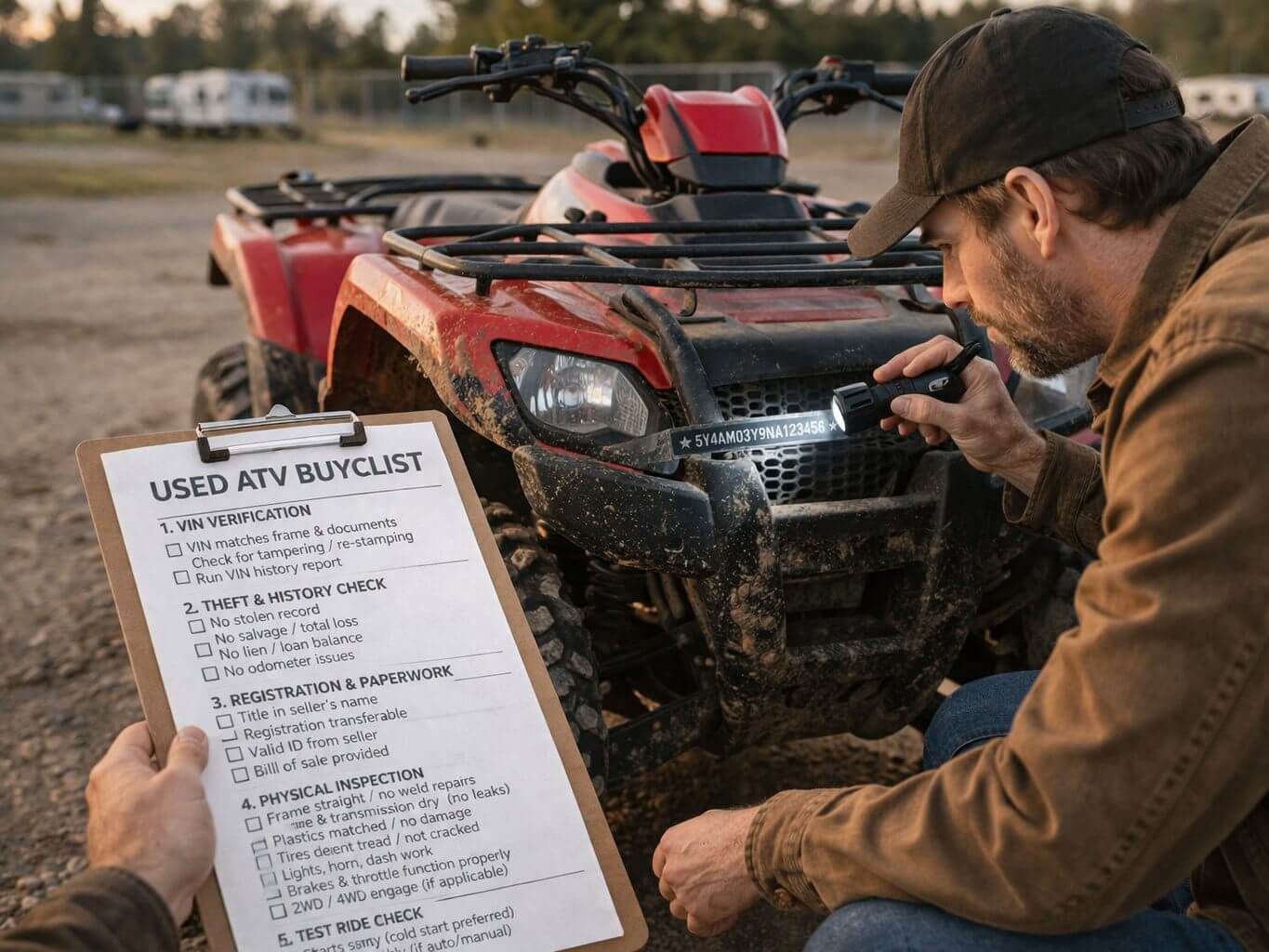
Used ATV Buying Checklist: VIN, Theft, and Registration
Buying a used ATV can be rewarding, but it also carries risks that are easy to overlook—especially in private sales. Many problems related to theft, ownership, and misrepresentation only surface after money has changed hands.
This checklist-style guide explains what to verify when buying a used ATV, with a focus on VIN validation, theft screening, and registration considerations in Canada.
Why a Checklist Matters for Used ATV Buyers
ATVs are often sold without standardized paperwork, plates, or formal ownership transfers. Because of this, buyers rely heavily on due diligence to avoid:
- Purchasing a stolen ATV
- Buying an ATV that cannot be registered or insured
- Paying too much for a misrepresented model or year
A structured checklist reduces guesswork and helps buyers make confident decisions.
Step 1: Locate and Inspect the VIN
Start by finding the Vehicle Identification Number (VIN) on the ATV. Common locations include:
- Frame near the front suspension or steering stem
- Under the seat or near the engine bay
- A manufacturer-installed VIN plate
Inspect the VIN carefully. It should be clearly stamped or professionally affixed and free from tampering.
Step 2: Verify the VIN Using an ATV-Specific Check
Once located, use the VIN to verify the ATV’s identity. Running an ATV VIN check helps confirm whether the VIN is valid and whether the ATV matches the seller’s description.
VIN verification is especially important when the seller claims:
- A specific model year or trim
- Factory-installed features or upgrades
- Low usage or limited production models
Step 3: Screen for Theft Risk
ATVs are frequently targeted for theft, particularly when used off-road or stored seasonally. Buyers should be cautious when:
- The seller cannot explain ownership history
- There is no bill of sale or registration paperwork
- The price is far below market value
VIN-based screening helps reduce the risk of purchasing a stolen ATV.
Step 4: Review Ownership and Registration Status
Registration rules for ATVs vary by province. Some ATVs are registered for trail use, while others are not registered at all.
Buyers should confirm:
- Whether the ATV has been registered previously
- If registration can be transferred into the buyer’s name
- What documentation is required by the province
Understanding registration requirements early helps avoid post-purchase complications.
Step 5: Watch for Common Red Flags
Be cautious if you encounter:
- Missing or altered VINs
- Sellers unwilling to provide the VIN upfront
- Recently painted frames near VIN locations
- Inconsistent claims about year, model, or ownership
These warning signs often indicate deeper issues.
Comparison: ATV Buying Risks and Verification Steps
| Risk | What to Check |
|---|---|
| Misrepresented model | VIN verification |
| Theft risk | VIN-based screening |
| Registration problems | Provincial registration rules |
| Ownership uncertainty | Seller documentation |
Final Thoughts
Using a used ATV buying checklist helps buyers avoid theft, ownership problems, and costly mistakes. While no single step guarantees a perfect purchase, combining VIN verification, theft screening, and registration review significantly reduces risk.
Before buying, locate the VIN, verify it using an ATV-specific VIN check, and confirm registration requirements in your province. A careful approach protects both your investment and your peace of mind.