What an ATV VIN Number Can Tell You (and How to Decode It)
What an ATV VIN Number Can Tell You
When shopping for a used ATV, sellers often describe the machine using broad terms like “fully loaded,” “special edition,” or “low hours.” Without verification, those claims are easy to exaggerate. The most reliable way to confirm what an ATV really is starts with its Vehicle Identification Number (VIN).
This guide explains what an ATV VIN number can tell you, how VIN decoding works, and why VIN-based verification is essential before buying.
What Is an ATV VIN?
An ATV VIN is a unique 17-character code assigned by the manufacturer. It identifies the ATV’s origin, configuration, and production details. Unlike decals or aftermarket parts, the VIN reflects how the ATV was originally built.
VIN decoding helps buyers verify information that listings and verbal descriptions may not accurately represent.
Manufacturer and Country of Origin
The VIN reveals:
- The ATV manufacturer
- The country where the ATV was built
- The production facility
This information helps confirm brand authenticity and ensures the ATV is not being misrepresented as a different model or manufacturer.
Model Year and Production Information
An ATV’s VIN encodes the model year and, in some cases, production sequence details. This is especially important because:
- Model years may not align with registration dates
- Some ATVs are sold as later models than they actually are
VIN-based year verification helps buyers confirm age accurately.
Engine Type and Configuration
Depending on the manufacturer, VIN decoding may reveal:
- Engine displacement
- Fuel type
- Emissions configuration
This is useful when sellers claim engine upgrades or performance packages that may not be factory-installed.
Trim Level and Factory Configuration
VINs can help verify:
- Base vs higher trim models
- Factory-installed options
- Original drivetrain setup
This is particularly important when pricing varies significantly between trims.
Identifying Mismatches Between VIN and Listing
VIN decoding helps uncover common discrepancies, such as:
| Seller Claim | VIN-Based Reality |
|---|---|
| Newer model year | Older production year |
| Higher trim | Base configuration |
| Larger engine | Smaller factory engine |
When mismatches appear, buyers should pause and ask for clarification.
VIN Checks and Theft Risk
Because ATVs are frequently sold privately and used off-road, theft risk is higher than many buyers realize. VIN-based checks help screen for stolen ATVs and suspicious records.
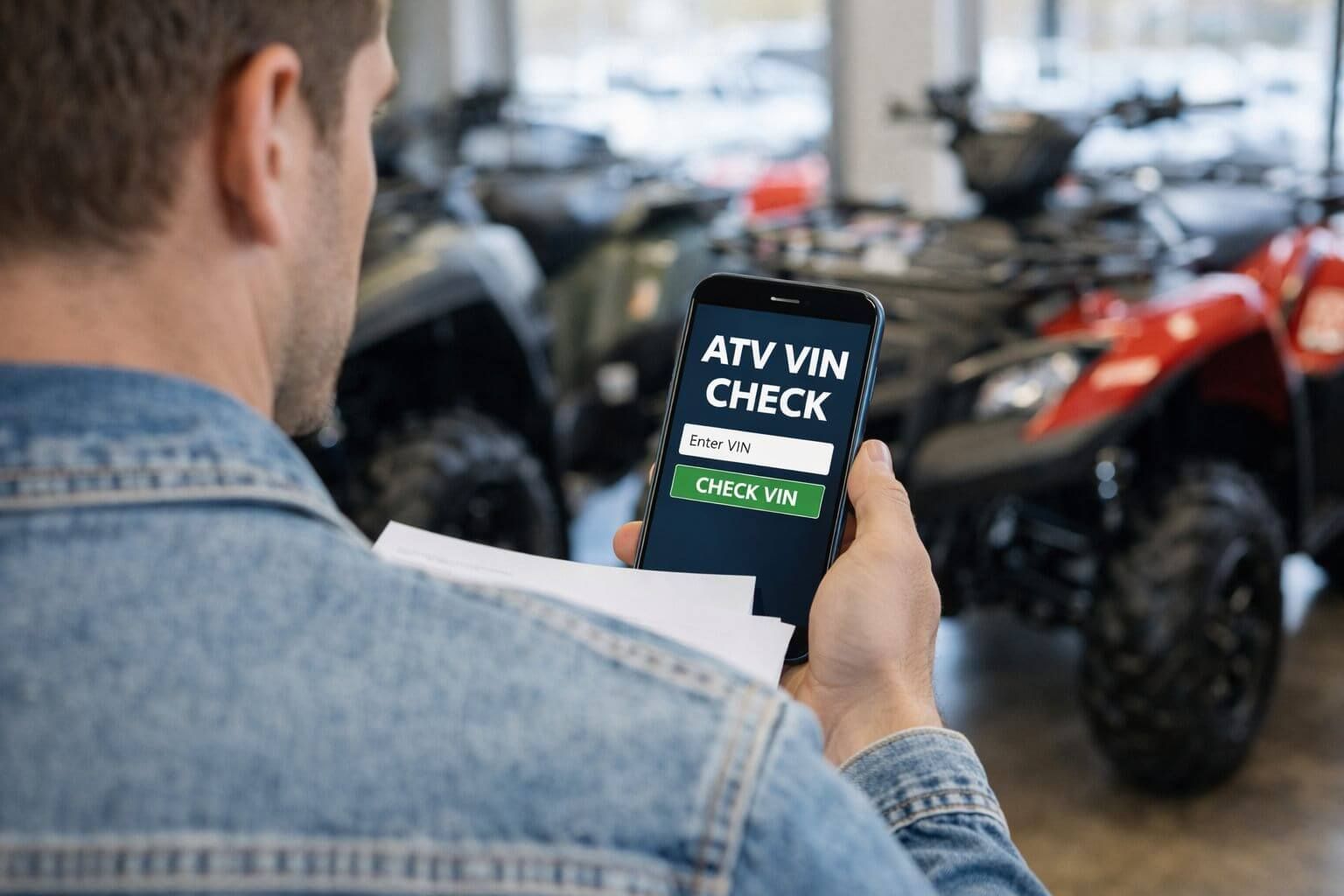
Running an ATV VIN check helps confirm whether the VIN is valid and whether the ATV may be associated with theft indicators.
What an ATV VIN Cannot Tell You
While VINs provide powerful verification, they do not replace:
- Mechanical inspection
- Wear and tear evaluation
- Maintenance history review
VIN decoding should be used alongside physical inspection and careful seller evaluation.
How VIN Information Fits Into the Buying Process
VIN decoding is most effective when combined with:
- VIN location verification
- Theft screening
- Ownership and registration review
Together, these steps reduce the risk of misrepresentation.
Final Thoughts
Understanding what an ATV VIN number can tell you gives buyers a factual foundation for evaluating used ATVs. VIN decoding helps verify manufacturer details, model year, engine configuration, and trim level—information that listings alone cannot guarantee.
Before buying, locate the VIN, decode it carefully, and verify the results using an ATV-specific VIN check. Accurate information upfront leads to better decisions and fewer surprises later.