Where to Find a Motorcycle VIN (Street, Dirt, Touring Bikes)
Where to Find a Motorcycle VIN (Street, Dirt, Touring Bikes)
Before you can verify a motorcycle’s history or confirm its specifications, you need the correct Vehicle Identification Number (VIN). While VIN placement is standardized more than on ATVs, it can still vary by motorcycle type, brand, and model year.
This guide explains where to find a motorcycle VIN on street bikes, dirt bikes, and touring motorcycles, what a legitimate VIN should look like, and what to do if the VIN is missing or damaged.
Why VIN Location Matters for Motorcycles
Motorcycles are often sold through private listings and may lack complete documentation. The VIN is the most reliable identifier linking the bike to manufacturer data and verification tools.
Finding and confirming the VIN allows buyers to:
- Verify the model year and manufacturer
- Confirm the bike matches the seller’s description
- Screen for theft or misrepresentation
- Proceed with a motorcycle-specific VIN check
Common VIN Locations on Motorcycles
Most motorcycles follow similar VIN placement rules. Start with these areas.
1. Steering Head / Headstock (Most Common)
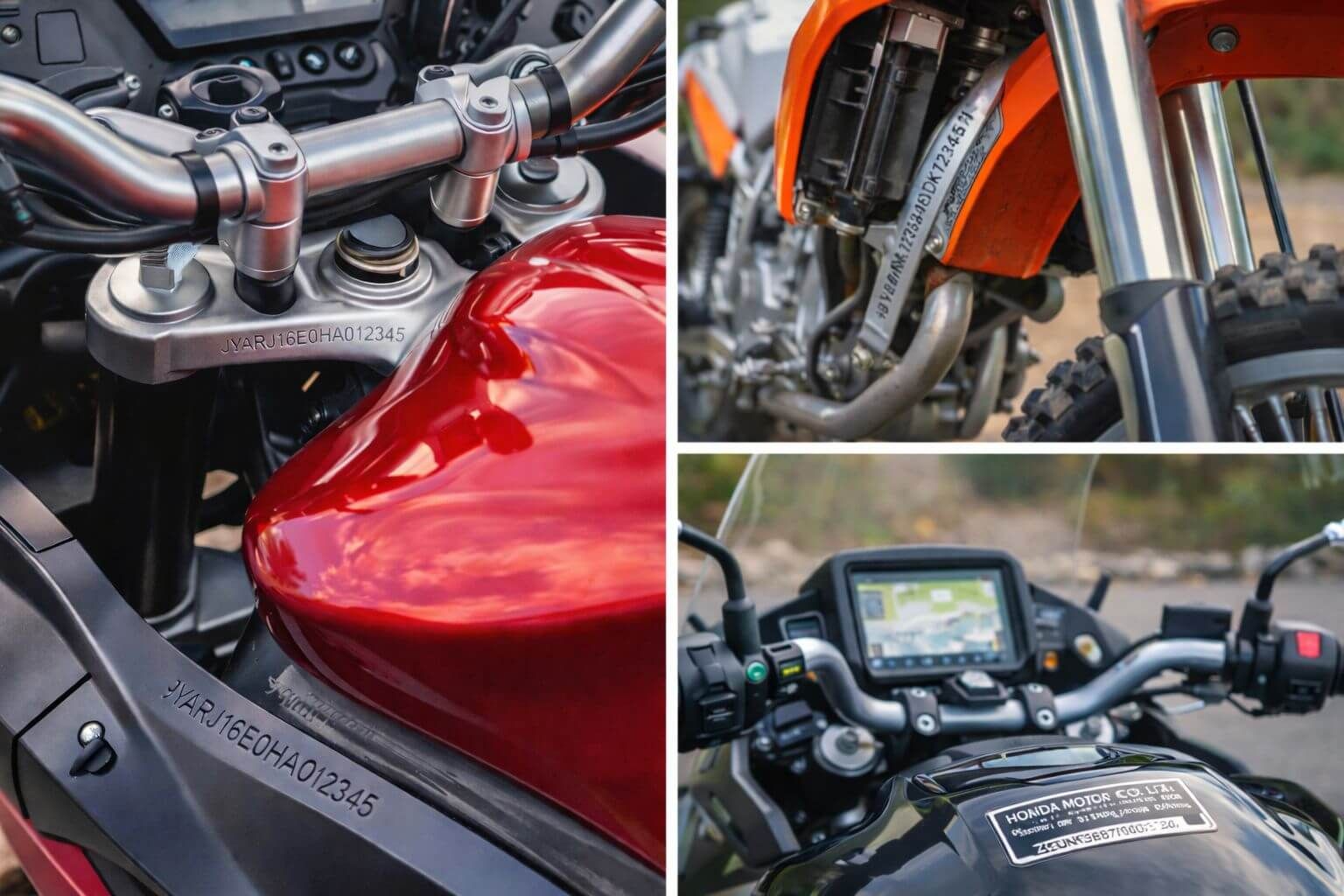
The most common location is the steering head (also called the headstock):
- On the right or left side of the frame neck
- Just below the handlebars
The VIN is typically stamped directly into the metal and should be clearly legible.
2. Frame Near the Front Fork
On some models, especially older or off-road bikes, the VIN may appear:
- On the frame rail near the front fork
- Slightly lower than the steering head
This area may require turning the handlebars fully to one side for visibility.
3. Manufacturer VIN Plate or Label
Some motorcycles include:
- A riveted metal VIN plate
- A factory-applied VIN label
These are usually located near the steering head or frame neck. Plates should look professionally installed and consistent with factory standards.
VIN Locations by Motorcycle Type
Street Motorcycles
Street bikes almost always have the VIN:
- Stamped on the steering head
- Accompanied by a VIN plate or label
This applies to sport bikes, standard motorcycles, and cruisers.
Dirt Bikes
Dirt bikes may have VINs:
- Stamped on the frame near the steering head
- Less prominently displayed than street bikes
Because dirt bikes are used off-road, VINs may be dirty, scratched, or partially obscured.
Touring and Adventure Motorcycles
Larger touring and adventure bikes typically place the VIN:
- On the steering head or frame neck
- Sometimes duplicated on a manufacturer label
These bikes often have more body panels, so visibility may require closer inspection.
What a Legitimate Motorcycle VIN Should Look Like
A valid motorcycle VIN typically:
- Contains 17 characters (letters and numbers)
- Is stamped cleanly and evenly into the frame
- Matches registration or insurance documents
Be cautious if the VIN:
- Appears ground down, altered, or re-stamped
- Is partially missing or unreadable
- Does not follow standard VIN formatting
If something looks suspicious, pause the transaction.
What to Do After You Find the VIN
Once located, verify the VIN before moving forward. Running a motorcycle VIN check helps confirm whether the VIN is valid and whether the motorcycle aligns with the seller’s claims.
VIN verification is a critical step before payment, transfer, or insurance setup.
When a Motorcycle Has No VIN or a Damaged VIN
Missing or damaged VINs can result from:
- Frame replacement after an accident
- Theft or attempted VIN removal
- Severe corrosion or wear
Motorcycles without a readable VIN are difficult to verify, insure, or resell. In most cases, it’s safest to walk away.
Final Thoughts
Knowing where to find a motorcycle VIN is a crucial first step before any verification or purchase decision. Because VIN placement varies slightly by motorcycle type, careful inspection of the frame and steering head is essential.
After locating the VIN, confirm it using a motorcycle-specific VIN check and compare the results with the seller’s description. A few minutes of inspection can prevent serious problems later.