Where to Find a VIN on Utility, Cargo, and Boat Trailers
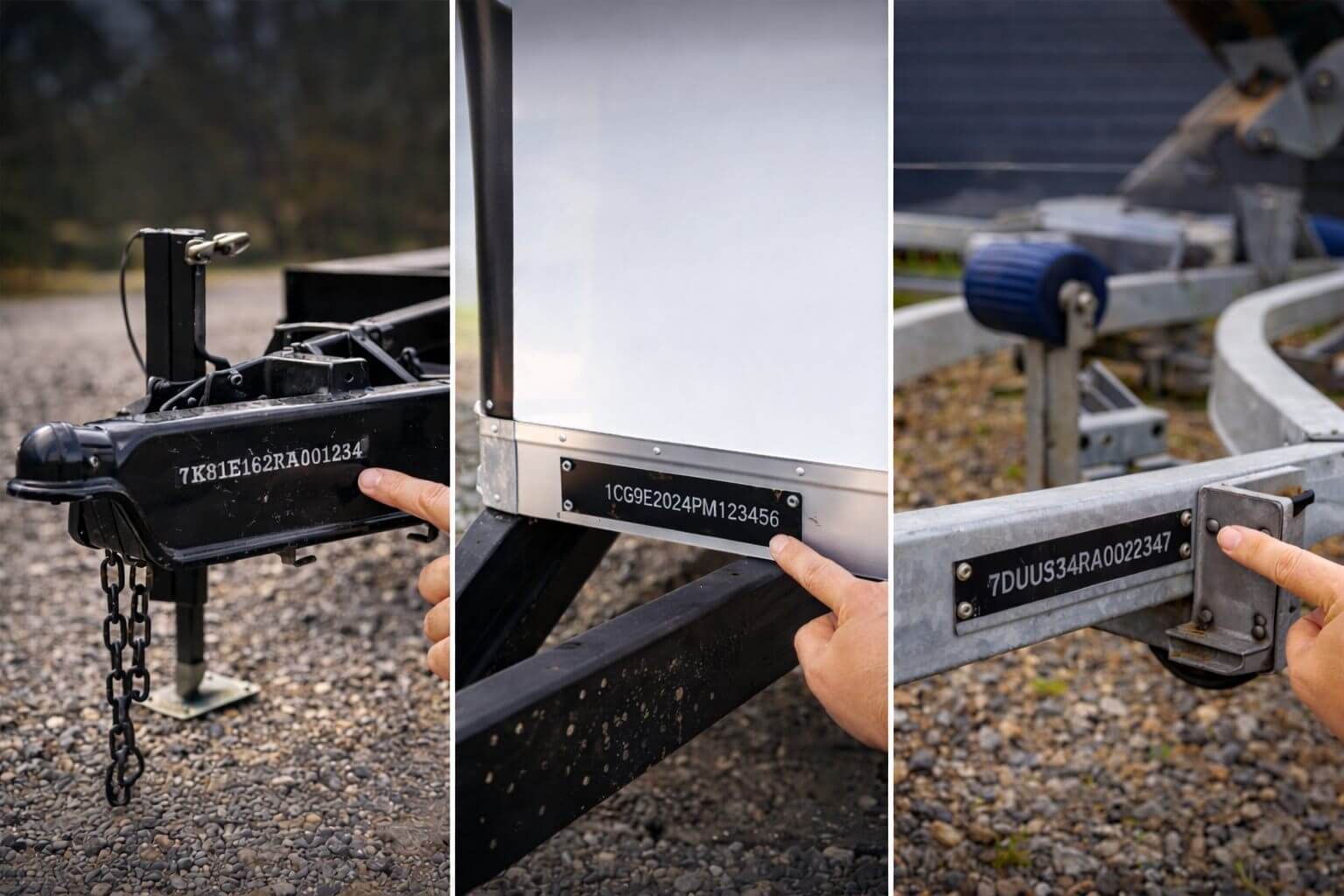
Where to Find a VIN on Utility, Cargo, and Boat Trailers
Before you can verify a trailer’s history or specifications, you need to locate the Vehicle Identification Number (VIN). Unlike cars, trailers do not have a single standardized VIN location, and exposure to weather can make VINs harder to spot.
This guide explains where to find a VIN on utility, cargo, and boat trailers, what a legitimate trailer VIN should look like, and what to do if the VIN is missing or damaged.
Why VIN Location Matters for Trailers
Trailers often change hands through private sales and may not always be registered consistently across provinces. The VIN is the primary identifier that links a trailer to manufacturer records and verification tools.
Locating the VIN allows buyers to:
- Confirm the trailer’s manufacturer and year
- Verify size, weight, and type claims
- Screen for theft or misrepresentation
- Proceed with a trailer-specific VIN check
Common VIN Locations on Trailers
While VIN placement varies by manufacturer, most trailers follow similar patterns. Start with these areas.
1. Trailer Tongue or Hitch Frame
The most common VIN location is the trailer tongue:
- On the driver-side frame rail near the coupler
- Stamped directly into the metal or shown on a VIN plate
This area is exposed to road debris, so the VIN may require cleaning to see clearly.
2. Front Frame Rail
Some trailers place the VIN:
- Along the front frame rail
- On the driver side near the front corner
Inspect both sides of the frame if the VIN is not immediately visible.
3. VIN Plate or Manufacturer Label
Many trailers include:
- A riveted or welded metal VIN plate
- A manufacturer label with VIN and specs
VIN plates should look professionally installed and consistent with factory standards.
VIN Locations by Trailer Type
Utility Trailers
Utility trailers typically have VINs:
- Stamped on the tongue or front frame rail
- Displayed on a metal plate near the hitch
Cargo Trailers
Enclosed cargo trailers often place VINs:
- On the tongue frame rail
- Inside the front corner of the trailer near the door
Boat Trailers
Boat trailer VINs are commonly found:
- On the tongue near the coupler
- On a VIN plate attached to the frame
Because boat trailers are exposed to water, VINs may show corrosion.
What a Legitimate Trailer VIN Should Look Like
A valid trailer VIN typically:
- Contains 17 characters (for most modern trailers)
- Is stamped cleanly or professionally affixed
- Matches any documents provided by the seller
Be cautious if the VIN:
- Appears ground down or altered
- Is partially missing or unreadable
- Does not follow standard VIN formatting
What to Do After You Find the VIN
Once located, verify the VIN before proceeding. Running a trailer VIN check helps confirm whether the VIN is valid and whether the trailer aligns with the seller’s claims.
VIN verification should be completed before payment or transfer.
When a Trailer Has No VIN or an Unreadable VIN
Missing or unreadable VINs may result from:
- Age and corrosion
- Frame repairs or modifications
- Theft or attempted VIN removal
Trailers without a readable VIN can be difficult or impossible to register. In most cases, walking away is the safest option.
Final Thoughts
Knowing where to find a VIN on utility, cargo, and boat trailers is a crucial first step before any verification or purchase decision. Because VIN placement varies, inspecting the tongue and front frame carefully is essential.
After locating the VIN, verify it using a trailer-specific VIN check and compare the results with the seller’s description. A few minutes of inspection can prevent serious problems later.